New Zealand · Travel journal
Aoraki / Mount Cook: a quiet journey into the Hooker Valley.
Aoraki / Mount Cook Village is a place where the road feels small. The Southern Alps rise around the settlement, and the drive towards White Horse Hill becomes a gradual introduction to the landscape: tussock on the valley floor, pale water between rocks, and snowfields appearing above the slopes. This is our Mount Cook travel journal, following the route shown in the narrated film and the photographs made along the way.
Our journey follows the first part of the Hooker Valley Track to Mueller Lake and the first swing bridge, then returns through the valley. It does not continue to Hooker Lake. That shorter visit still leaves plenty to look at, especially when you give the river, the weather and the mountain slopes time to become more than a quick stop.
From Aoraki / Mount Cook Village into the valley
The road gives this film its rhythm. Instead of beginning with a summit view, we begin among the buildings of the village and let the mountains enter the frame as the journey develops. The broad floor of the valley is part of the story, rather than simply the space between the camera and a distant peak.
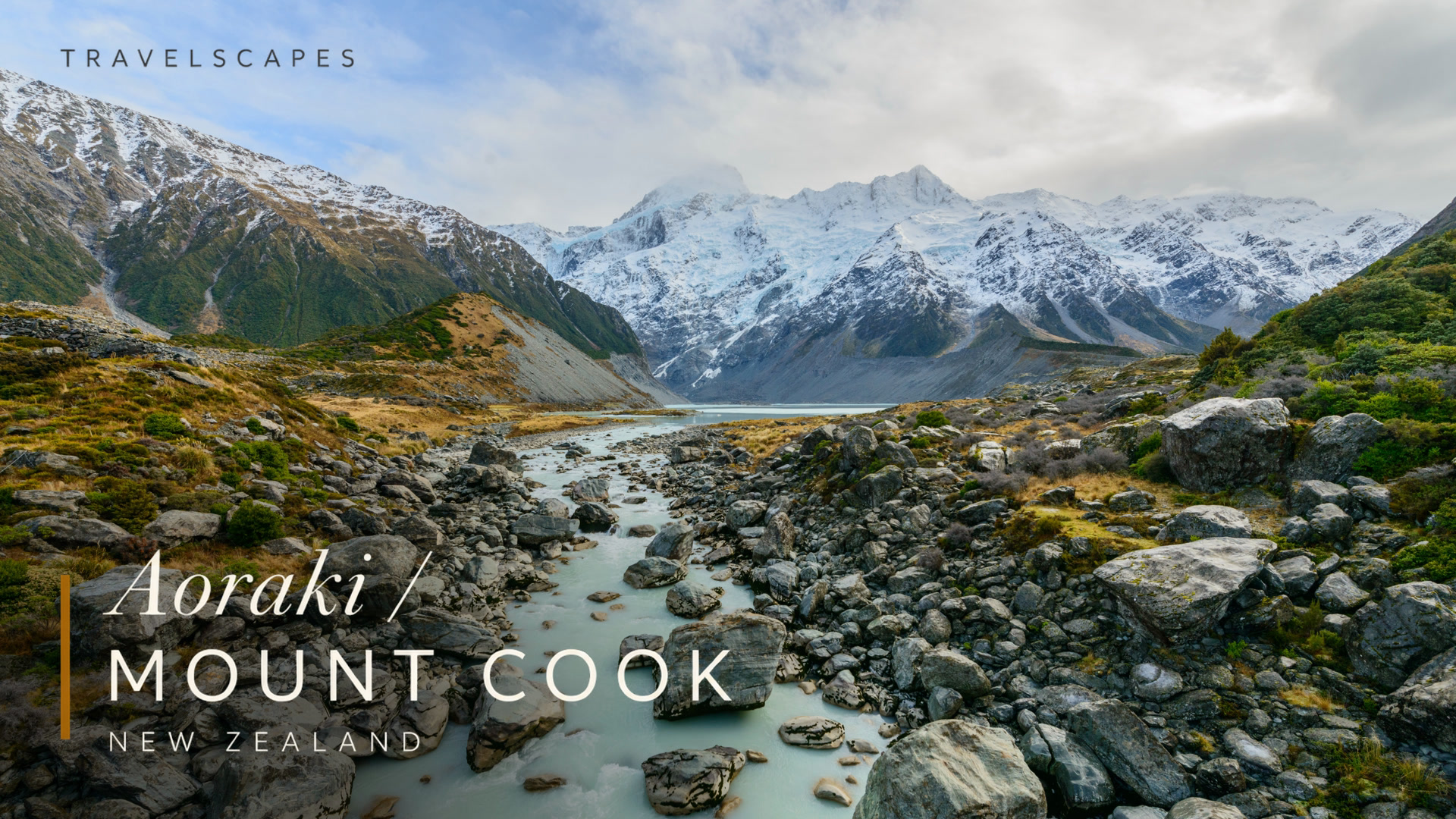
Aoraki is behind cloud in the narrated journey. That matters to the photographs as much as a clear view would: the eye moves towards the visible snowfields, the river and the layers of rock. A visit to Mount Cook does not need a cloudless mountain portrait to leave you with a strong sense of place. In these frames, the foreground is doing much of the work.
White Horse Hill: where the drive becomes a walk
The film follows the road towards White Horse Hill before continuing on foot. The change of pace is simple but important. Through the windscreen, the valley arrives as a sequence of views. Once walking, the sound of the river and the shape of the rocks become details you can stay with.
For this journey, White Horse Hill is the transition between two ways of seeing the same place. The drive shows the scale of the Southern Alps; the walk brings the camera closer to the water and the ground. If you are using the film to plan a visit, keep that distinction in mind: its running time is seven minutes and ten seconds, not a walking-time estimate.
Mueller Lake and the first Hooker Valley swing bridge
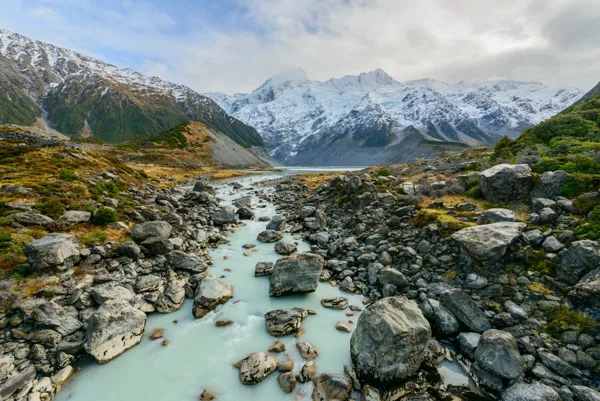
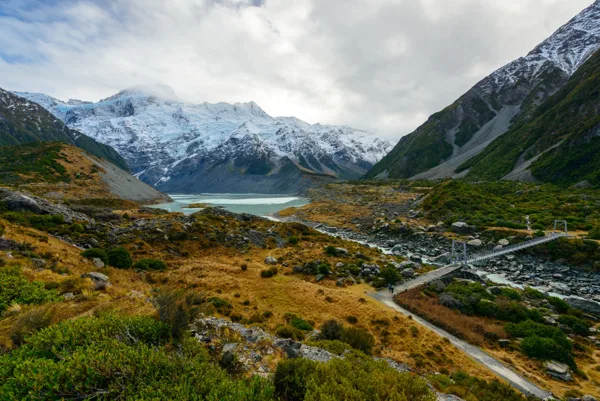
Near the first bridge, the view opens across Mueller Lake towards the snowy mountain slopes. One photograph holds the bridge in the foreground; the other stays closer to the water running between the boulders. Together they show the larger setting and one small part of its movement.
The narration draws attention to the pale glacial water, the river below and the changing landscape. For the journal, the photograph captions identify what is actually in each frame. Mueller Lake is the lake shown here; it should not be confused with Hooker Lake farther along the track. We turn around near this first bridge, so the later stages of the full walk are planning context rather than a firsthand account from this film.
Photographing Mount Cook and the Hooker Valley
Start with a foreground you can understand. A line of water between rocks gives the viewer a way into a large mountain landscape, while the bridge in the Mueller Lake photograph makes the scale easier to read. The strongest detail does not always need to be the highest peak.
Cloud can simplify a frame or hide its main subject. When a summit disappears, look for the parts of the scene that remain: the contrast of snow against darker rock, the bends in the river, or the quieter tones across the lake. The photographs here use those visible relationships rather than depending on a clear view of Aoraki.
Leave time to look before changing position. A wider composition tells the story of the valley; a closer one can tell the story of the water. If you are filming as well, record the natural ambience and let some shots breathe. The location sound in this journey is part of what connects the road footage to the still images.
Keep photography within the designated track and viewpoints. A bridge is a crossing point: follow the signs and leave room for people to pass rather than stopping traffic for a composition. For photographs of this particular visit, select an image below to open its individual portfolio page.