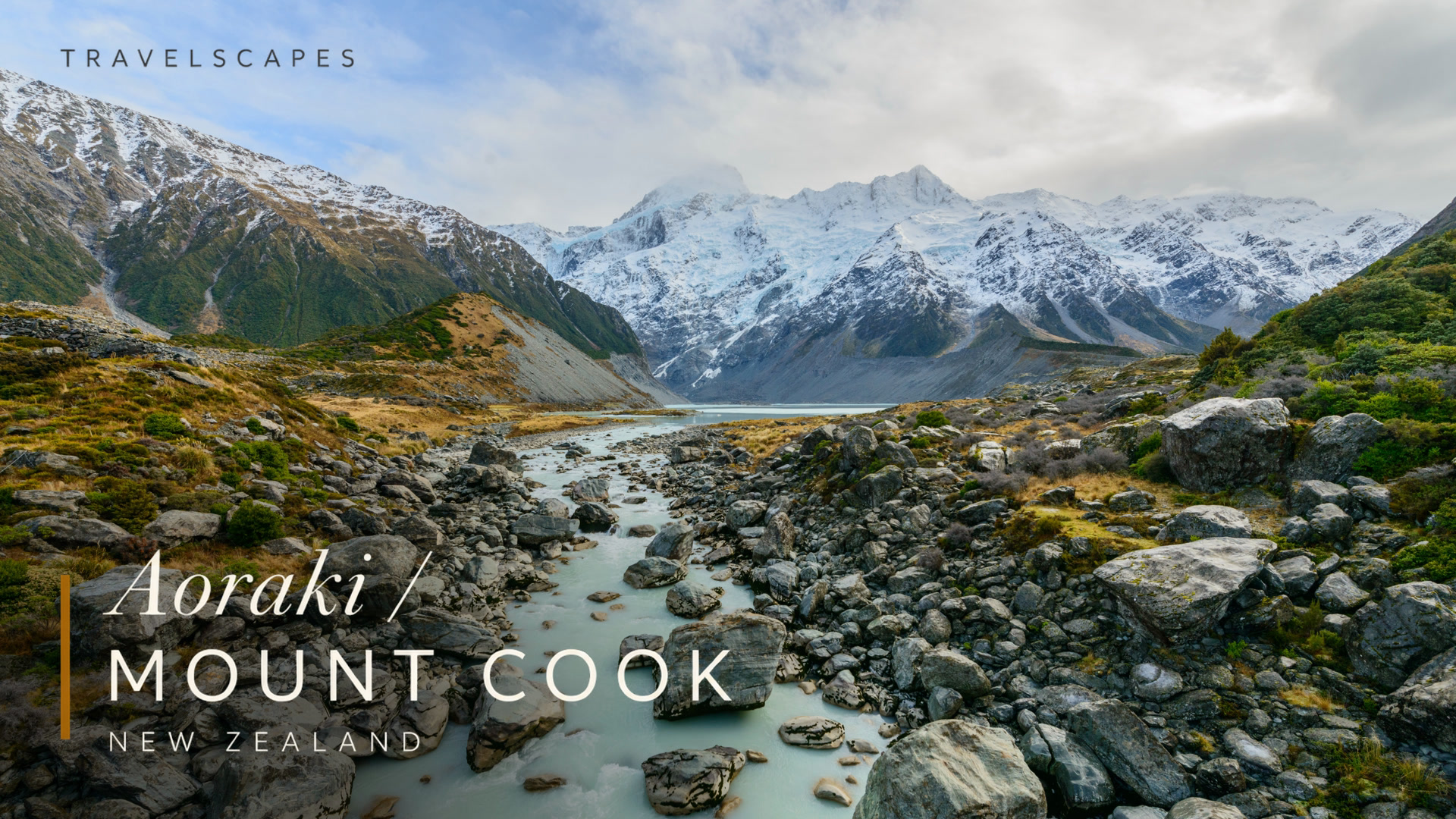
Into the Hooker Valley.
The journey begins in Aoraki / Mount Cook Village, with the Southern Alps rising around the road. We travel towards White Horse Hill, then continue on foot to Mueller Lake and the first swing bridge before returning through the valley.
Along the way, the narration explores the landscape shaped by ice, the story of Aoraki, and the pale water carrying finely ground glacial rock. Between those passages, the road and the location sound have time to speak for themselves.
Visual chapters
Read the narration transcript
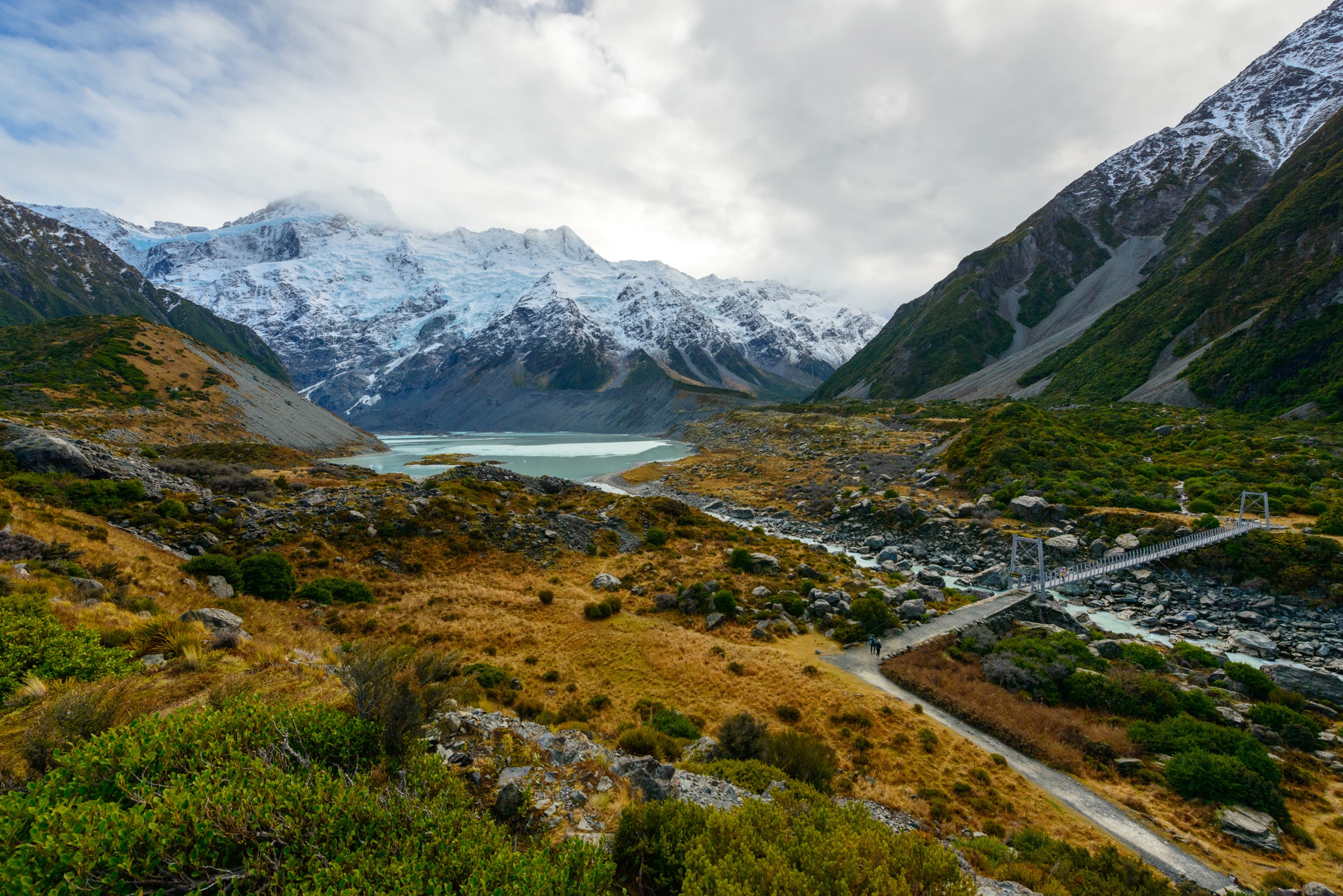
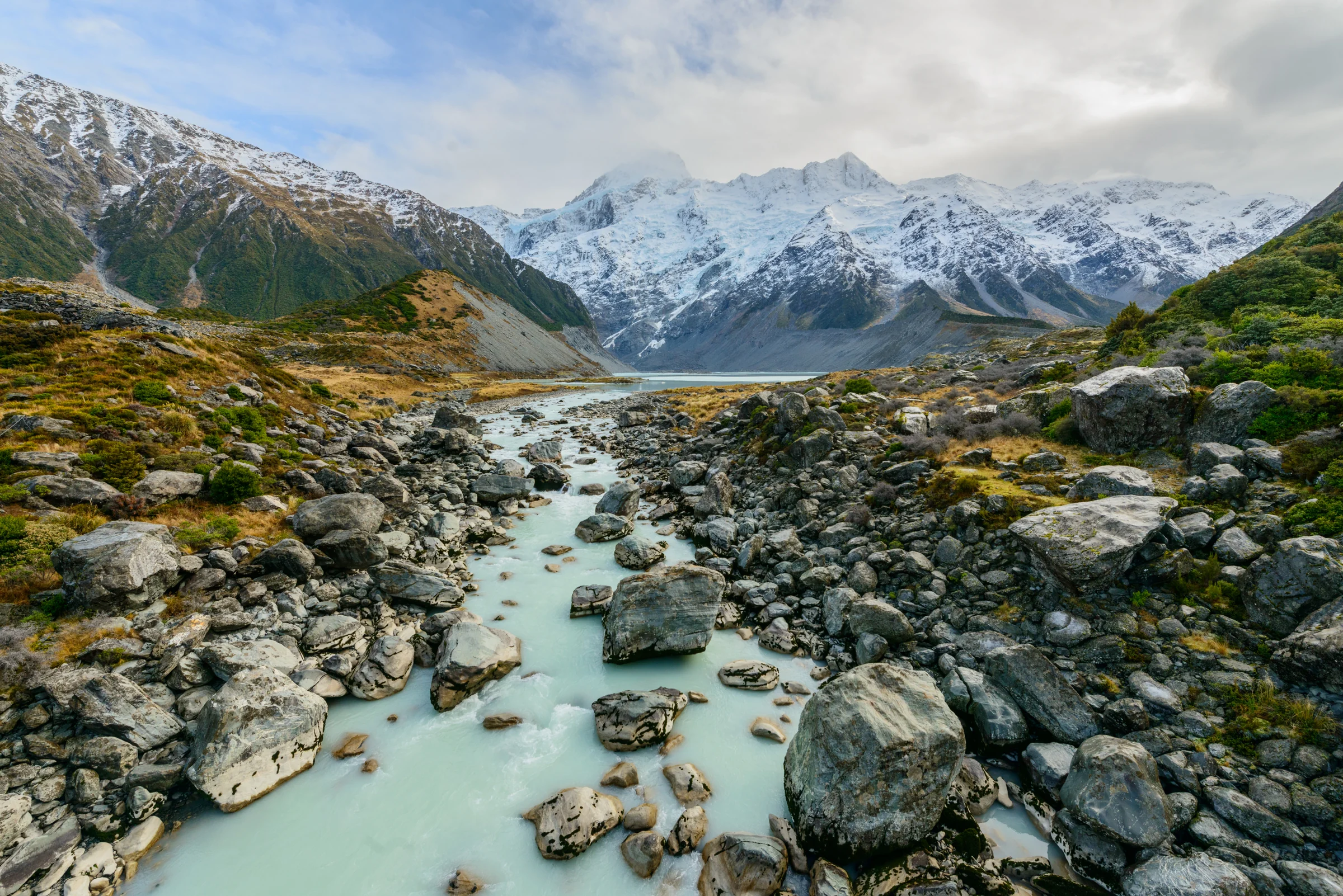
This is Aoraki Mount Cook Village, a small settlement at the very end of the road, with the Southern Alps rising on almost every side. From here, we're heading up the Hooker Valley, towards the highest mountain in New Zealand. Notice how wide and flat the valley floor is. That shape is the work of ice. Glaciers once filled this valley from side to side, and as they moved, they ground it into a broad U, very different from the narrow V a river cuts. The golden tussock has simply grown back over what the ice left behind. As we turn up the Hooker Valley, the snow comes into view. Aoraki sits somewhere at the head of this valley, hidden behind today's cloud. Its name is often translated as "cloud piercer", which feels about right. For Ngāi Tahu, Aoraki is an ancestor. The story goes that Aoraki and his brothers were at sea when their canoe ran aground and tipped. They climbed up onto its high side, and the cold south wind turned them to stone. The canoe became the South Island, and Aoraki, the tallest, became its highest peak. Climbers have been coming up this valley for well over a century. The first to stand on the summit, on Christmas Day 1894, came this way. Later, a young Edmund Hillary sharpened his skills on these same peaks, years before Everest. Off to the left, the snowfields around Mount Sefton are starting to fill the view. We'll see much more of them from the trail. Up ahead, the road runs out at White Horse Hill. There's a campsite here, run by the Department of Conservation, and from here the only way further up the valley is on foot. The hill itself is a moraine, a long ridge of rubble the Mueller Glacier pushed here a few hundred years ago, when the ice reached its furthest point. Since then, it's been retreating up the valley. Near the start of the track, there's a small memorial to the climbers who never came back from these mountains. Now we're on foot. The Hooker Valley Track follows the river for about five kilometres, towards the mountains. It's mostly flat, and it's one of the best-loved walks in the country. And there it is. Mueller Lake, and below it, the first of three swing bridges across the Hooker River. That milky blue is glacial flour, rock ground so fine by the ice that it hangs in the water and catches the light. Not so long ago, this whole basin was full of ice. The lake is simply what the glacier left behind. Across the water is Mount Sefton, one of the highest mountains in New Zealand, with its ice spilling down towards the valley floor. Listen, and you can hear the river working its way through the boulders below. The track carries on from here to Hooker Lake, where icebergs drift in summer. For today, though, we turn around and head back down the valley, with the mountains behind us now. All that water is still on its way somewhere. It runs down the Hooker River into the Tasman, and on to Lake Pukaki, carrying a little more of these mountains with it. And for a little while, there's really nothing more to explain. Hooker Lake, at the end of this track, barely existed a generation ago. The lake we know today began forming in the early 1980s as the glacier retreated. Here, the landscape changes within a single lifetime. Come back in a generation, and this view will look different again. These mountains were here long before us, and they'll be here long after. Thanks for coming along. I'll see you on the next road.