
Hospitality artwork
Choosing Landscape Artwork for Your Hotel or Restaurant
The right artwork for a hotel or restaurant has to work from more than one viewpoint. A guest may first see it across a lobby, then notice its detail while waiting at reception. A restaurant photograph may sit behind a table, where reflections and the height of the seating matter as much as its colors.
Start with the actual room. A useful hospitality wall-art selection connects the photographs, architecture and way people move through the space. These Travelscapes photographs illustrate choices to consider; they are not examples of completed hotel or restaurant installations.
Measure the view, not just the empty wall
Record the available wall width and height, nearby furniture, switches and fixtures. Photograph the wall straight on, then from the entrance and from a seated guest's position. Note which view matters most. A picture beside reception may need to read across the room; a piece in a small dining alcove can reward closer attention.
Mark the proposed outside frame dimensions with removable paper or tape suitable for the wall finish. Include the frame and any mat, rather than measuring only the image. Check the arrangement from the normal walking route and every nearby seat. This simple size test is more useful than choosing a print from a small screen alone.
Choose a focal point or a quieter supporting image
A broad, simple composition can remain legible at a distance. The pale curves of the Algodones Dunes photograph have a different visual weight from a detailed rock formation. Its large areas of sand and sky offer a way to introduce a landscape without filling every part of the wall with intricate detail.

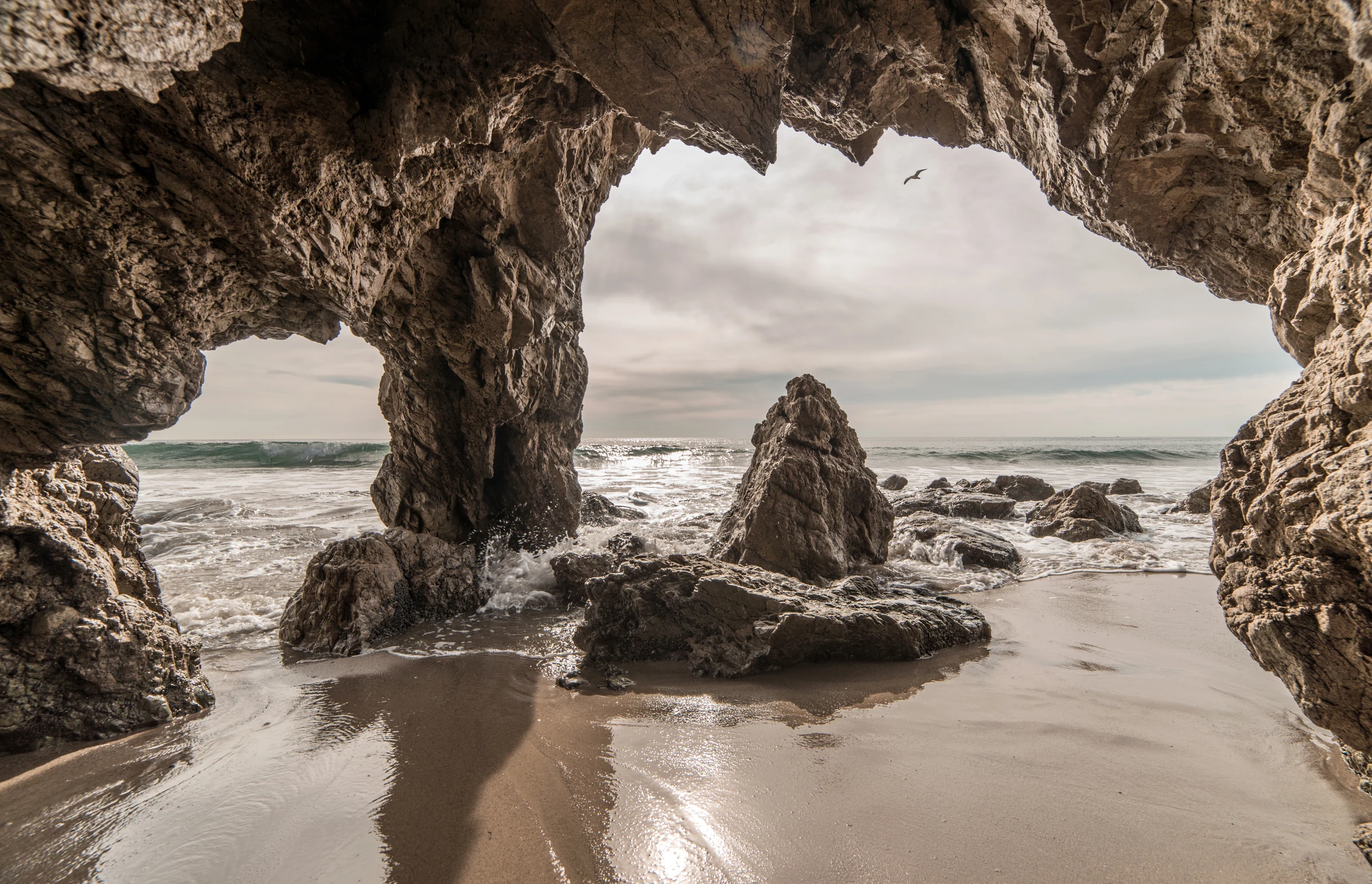
That does not make a minimal picture automatically better. If the room needs a distinct focal point, the dark rock arch at El Matador offers a strong frame around the sea. Compare the image with the furniture, signage and architectural details already competing for attention. A visually busy room may call for a different photograph from a restrained lobby.
Compare the palette under the room's real light
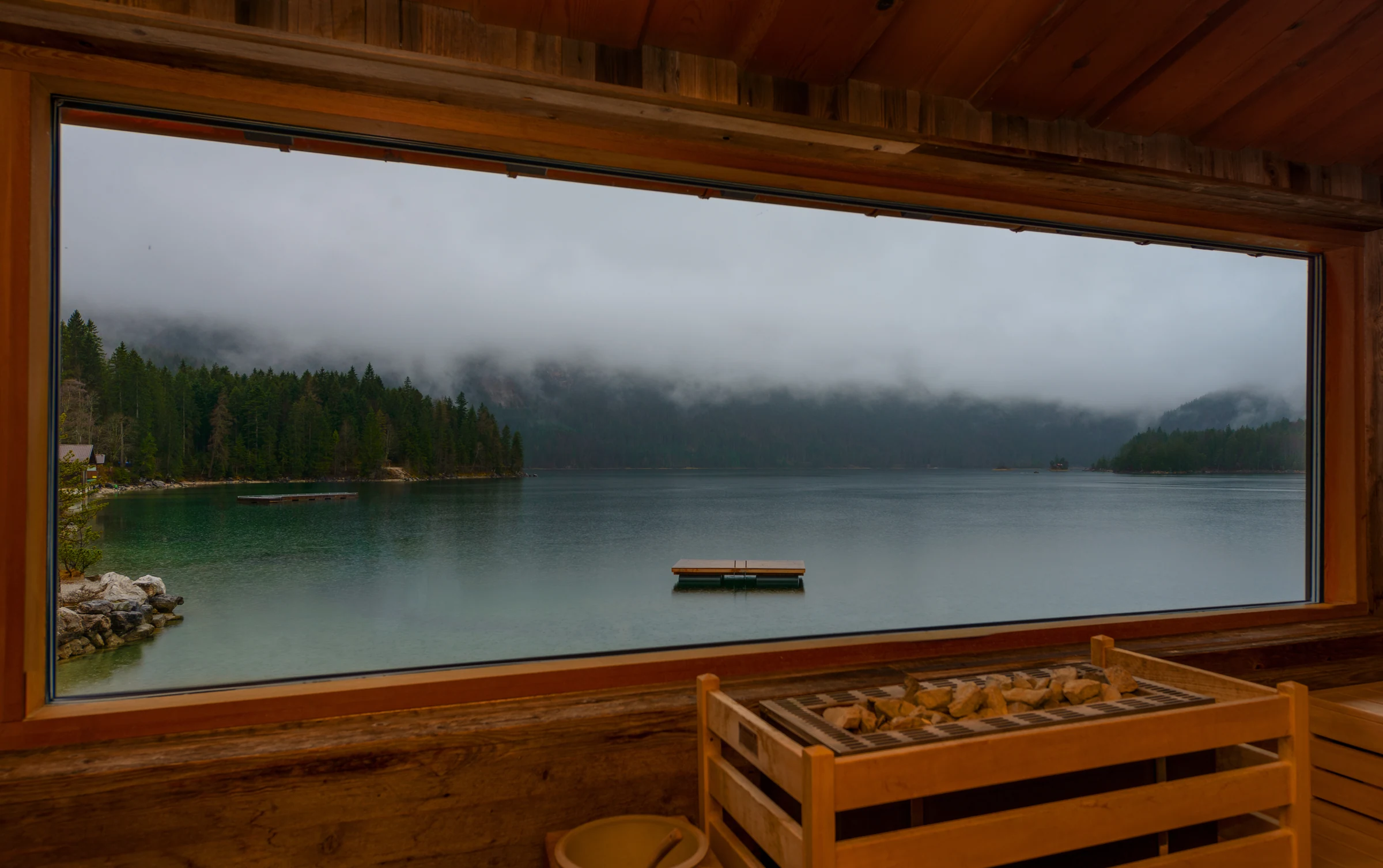
Look beyond a single matching accent color. Compare the photograph's light and dark areas, warm and cool tones, and amount of contrast with the room's timber, stone, upholstery and wall finish. A Window onto Eibsee combines a warm timber interior with a cooler lake and wooded view. That relationship is a useful starting point for a room with both warm materials and cool accents.
Review a print or finish sample under the lighting the room actually uses. Check daylight, evening service and any dimmed setting. Stand where guests will stand and sit where they will sit: windows and spotlights can reflect in a glazed or reflective surface. Ask about suitable print and framing options for the placement before committing to a finish. A screen preview cannot establish the appearance of a finished print in that light.
Give a series a clear connection
For a corridor or several dining areas, choose a shared idea: one coastline, a family of dune forms, or a consistent balance of trees and water. Then vary the compositions enough that each picture adds something. A wide view can establish the setting, while a closer detail offers a different rhythm farther along the route.
Set the proposed photographs beside one another before ordering. Check the horizon positions, contrast and frame sizes as a group. The three photographs in this article demonstrate different options; they are not presented as a ready-made matching series. Start within the relevant collection and edit a selection for your property.
Check the guest experience and the practical brief
Walk the route from entry to reception, tables or guest corridors. Decide where one prominent work is enough and where several smaller works make sense. Keep operational signs clear and check placement with the people responsible for cleaning, maintenance and installation. In spaces exposed to moisture, splashes or direct sun, discuss the conditions with the print and framing supplier.
Keep the story accurate. A landscape chosen for its atmosphere should not imply that it depicts the view from your property. Name the actual location when the surrounding context could cause confusion.
For a useful first inquiry, bring wall photographs, outside frame dimensions, viewing distances, lighting notes, image references, quantity and timing. Travelscapes' photography collections provide a starting selection; discuss sizing and print options for the intended space. Physical print purchases do not include reproduction or licensing rights. If you also want to use an image on your hotel website or restaurant marketing, include that separate use in the brief.