
Along the way.
A condensed driving and walking journey, with quiet intervals between the spoken passages. The closing walk includes the Sherman Tree Trail.
Original photography and footage by Sven Bannuscher. Narration uses a synthetic voice.
Chapters
Read the narration transcript
The giant trees are still ahead. For now, the road winds through open hillsides, where broad views give way to rock, leaves, and another bend. This is Sequoia National Park, on the western side of California’s Sierra Nevada. As we climb, we will follow a change in the landscape, from the foothills into the forest, then leave the road for a closer look at the trees. The journey begins in bright spring light. There is room to settle into the drive, and watch the country change around us. Here in the foothills, trees are spaced apart, and much of the hillside remains open to the sky. This lower country has a different rhythm from the forest above.
Rain falls mainly in winter, followed by a long, dry summer. Oaks and shrubs are adapted to that seasonal change. In spring, the hills can feel remarkably fresh, but the plants will have to conserve water as the months grow warmer. The road carries us through that first landscape, with time to notice its smaller details. Each bend changes the view. A rock face draws close, then the hillside opens again. There are brief glimpses beyond the road, but the mountain does not reveal itself all at once. The climb is gradual enough that the change in vegetation arrives in stages. Watch how the gaps between the trees begin to
close, and how the light shifts from an open wash of sunshine into alternating patches of brightness and shade. The road is part of the experience here. Its curves slow the journey and keep bringing the foreground back into view: a wall of rock, a slope of leaves, branches beside the windscreen. The distant landscape comes and goes between them. We are still moving toward the famous trees, but these stretches give the ascent its shape. The forest ahead belongs to this mountain setting, rather than standing apart from it. By now, the view has changed. Tall trunks stand close to the road, and the hillside is layered with branches and shade.
This is a mixed forest. Giant sequoias grow alongside other conifers, including firs, pines, and incense cedar. The giants command attention, but they are only part of the community around them. Look between the largest trunks, and there are smaller trees, patches of undergrowth, and openings where light reaches the ground. The forest is more varied than its famous name might suggest. The size of a giant sequoia is easiest to appreciate at close range. A broad trunk can dominate the scene before its crown is even visible. These trees are among the largest living things on Earth by volume.
Their great mass is supported by a history of growth that can span thousands of years. Yet size alone does not tell the whole story. A mature tree depends on the surrounding forest, its soil, and the conditions that allow another generation to begin. Fire has long been part of this forest. Under suitable conditions, it can open gaps in the canopy and expose mineral soil where sequoia seeds have a chance to grow. Thick bark gives large trees some protection, but it does not make them invulnerable. Severe fires can kill even mature giants. The relationship is a balance: the conditions that help renewal can become destructive when a fire burns too intensely.
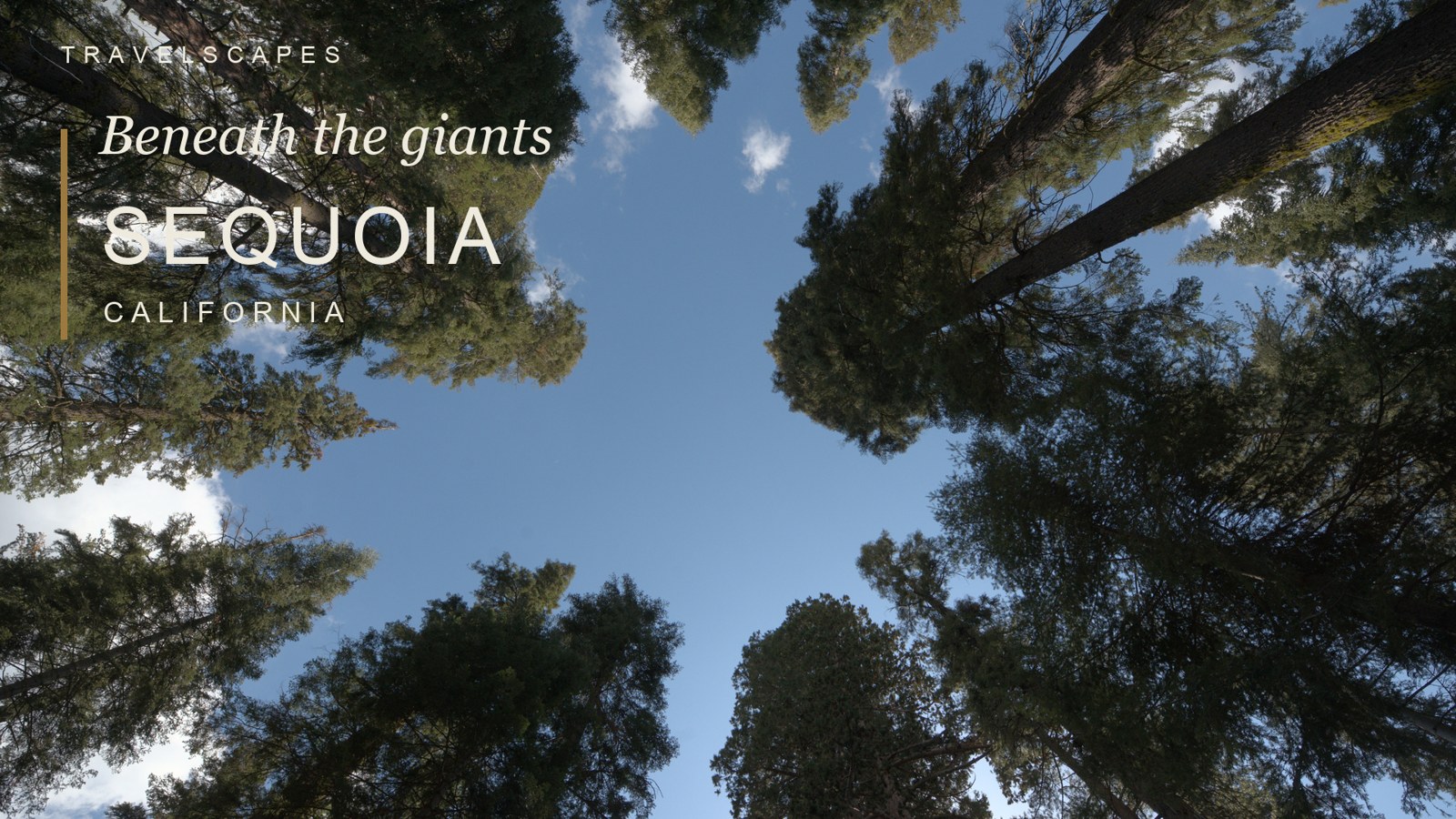
A living grove carries both the resilience and the vulnerability of that landscape. Now we leave the road and enter the forest on foot. The pace changes immediately. Bark, fallen wood, and the spaces between trunks become the foreground. Looking upward gives a sense of height, while looking across the ground reveals how much of the forest lies below the canopy. The trail sign marks the Sherman Tree Trail. Here, even a short walk offers a different understanding of scale from the view through a moving car. We began with open hillsides and followed the road into a world of tall trunks and deep shade. On foot, the forest becomes a collection of textures
and small changes in light. There is no need to take it all in at once. One tree, one patch of bark, or one opening between branches is enough to hold the attention. Thank you for joining this journey into Sequoia National Park. We will leave it here, among the trees.