
Settle into the story.
Original Travelscapes photographs accompany an imagined journey. The picture gradually dims from minute five to minute twenty-five, while the narration becomes gently slower and softer.
Original photography and footage by Sven Bannuscher. Narration uses a synthetic voice.
Chapters
Read the narration transcript
Welcome to Sleepscapes by Travelscapes. Tonight, a remembered journey takes us into the high country of Mauna Kea, on the island of Hawaiʻi, and gently home again. The original photographs hold the daylight views along the way. We will begin with the road and the clear sky, then let the details become quieter as the story goes on. You are a passenger in this journey. The seat beside the window is yours, and the day has already made room for a little time on the mountain. There is a folded sweater within reach, a bottle of water resting in its place, and the familiar low sound of the vehicle around you. Ahead, the road lies against a brown slope. Its curve is visible for a while, then disappears behind a rise. Beyond the rise, another part of the road comes into view.
The mountain gives the journey its shape, one bend at a time. From this window, the nearest ground is textured with stones. Farther out, the texture becomes a broad surface of warm brown and gray. Still farther away, the cloud layer forms a pale edge beneath the blue. The eye moves from one distance to the next without needing to choose between them. A small piece of road, a wide stretch of land, a sky that continues beyond the window. In the photographs, the daylight remains clear. As the story continues, the screen will gradually grow dimmer. The voice will become a little slower and softer, while remaining clear enough to follow. The journey belongs to memory now.
It can be followed slowly, with no turn you have to prepare for, and no arrival you have to arrange. The road keeps its place along the side of the mountain. You settle a little more comfortably against the seat, and watch the near slope pass into the distance. A faint reflection sits in the window, close enough to belong to the cabin rather than the mountain. When you look past it, the road is clear again. You rest your hand on the sweater and turn your attention toward the view. The simple things within reach make the unfamiliar landscape comfortable to watch. A place beside the glass, the steady movement of the vehicle, and the shape of the next rise ahead.
At first, it is the color of the ground that holds your attention. The island's high country has its own palette, separate from the green slopes and bright shoreline that might have filled the morning. Here, brown earth turns toward red where the light reaches it. A shaded face becomes cooler and grayer. Stones gather at the base of a rise, and the road cuts a smooth line through their rougher surface. Looking out, you notice how much a single bend can change the view. The shoulder of a hill comes close to the window and briefly fills it. Then the vehicle turns, and the distance opens again. Clouds lie beyond the next ridge. Their pale shapes make the ground seem darker, though the light itself has not changed. You follow the edge of the ridge with your eyes.
It climbs gently, settles, and climbs once more. The line is neither perfectly regular nor difficult to follow. It has the familiar unevenness of land seen at a distance. Nearer the road, one stone casts a short shadow. Another lies half buried in the surface. You can see them for a moment, then they pass out of the window's frame. Farther away, the mountain holds its shape much longer. The near details move past, while the distant outline seems almost still. Inside the vehicle, the sounds remain small. A steady note from the engine, the light movement of something secured behind the seat, a quiet change as the surface beneath the tires changes. There is no conversation to keep up with. Occasionally, your attention returns to the soft fold of the sweater beside you.
Then it moves back to the window. The road continues between the slopes, and each turn brings another simple arrangement of ground and sky. The road passes a place where the surface has several shades at once. A warmer patch beside a cooler one, a pale stone in darker ground. From this angle, the mountain is not one color after all. It has small variations that become visible only when the view stays close for a moment. You watch them pass, then let your eyes return to the wider ridge, where the separate colors come gently together. The pale observatory buildings become easier to see as the road brings them nearer. In one photograph, they stand across a ridge, separated by open ground. Some are rounded domes.
Others have straighter sides and darker sections. The buildings are distinct, but the mountain around them remains larger than all of them together. A road connects one part of the ridge to another. From a distance, it is a narrow gray line. Close to the window, it has an edge, a surface, and a small curve that follows the land. You find yourself looking at the spaces between the buildings. A stretch of brown ground. A low rise. A piece of sky resting above it. Those spaces make the scene feel unhurried. The observatories are places of work, but our quiet view stays outside them. We can appreciate the shape of a dome catching daylight without entering
the building, or imagining the work of a particular instrument. The photograph brings one pale structure close enough for its curve to be clear. Beneath it, the darker slope turns away from the light. Behind it, the clouds are small and distant. You look from the building to the cloud line, then back to the road. A vehicle window gives each part of the landscape its turn. A building comes into the frame, remains there for a while, then moves toward the edge. The sky stays. The broad ridge stays. You begin to feel how much of this journey is simply a change in the angle from which the mountain is seen. The same land can offer a different view after only a short distance.
With each bend, a familiar shape becomes slightly new, and then familiar again. A small shadow runs beneath the nearest building, keeping its bright wall separate from the ground. Around it, the land has no straight boundary. Its uneven surface continues across the ridge and down the slope. The building makes a useful point of reference, but the view soon carries your attention farther away. You notice the clouds again, and the space above them. The rounded dome remains in the photograph, with the mountain spread around it. For a little while, the journey pauses in memory. You picture a place beside the road where the view was held long enough to become a photograph. The vehicle is still.
The engine's steady note falls away, and the landscape has time to show its smaller details. A pale building on the next rise. The thin road across the ground. A darker patch of stone on a slope that otherwise seems smooth. In the foreground, the surface is made of many pieces, each catching the light in its own way. From farther back, those pieces combine into a single texture. You can look closely, or let them remain together. Beyond the nearest ridge, the cloud layer stretches across the view. It does not have a hard edge like the road. Its boundary is softer, becoming less distinct where one pale part meets another. The eye rests there for a moment.
Then it returns to the nearer ground, where the shadows have clear shapes. These are the ordinary differences that give a landscape its depth: near stone and distant cloud, a bright surface and its shaded side, a line that can be followed and another that gradually disappears. Somewhere behind the seat, a small object settles with a faint sound. The cabin is familiar, even in a place that looks unlike the low country of the island. The folded sweater is still beside you. The window frame is still close. You have a comfortable place from which to look. The remembered pause lasts a little longer, then the engine returns to its quiet rhythm. The view begins to move again, slowly at first.
The nearest stones leave the frame, and the ridge takes their place. The camera once held this arrangement of light for a fraction of a second. Now the photograph can give that same arrangement as much time as we want. The pause is different from the brief moment in which the picture was made. It belongs to the person looking at it. We can stay with a small curve of road, or with the nearest shadow, long after the vehicle in the remembered journey has moved on. Mauna Kea is a volcanic mountain, and its broad slopes contain a history far older than this day's journey. Later eruptions added cinder cones and rugged surfaces to the mountain's earlier form. That history is part of the irregular outline we see, though each particular stone keeps its own details beyond a passing glance.
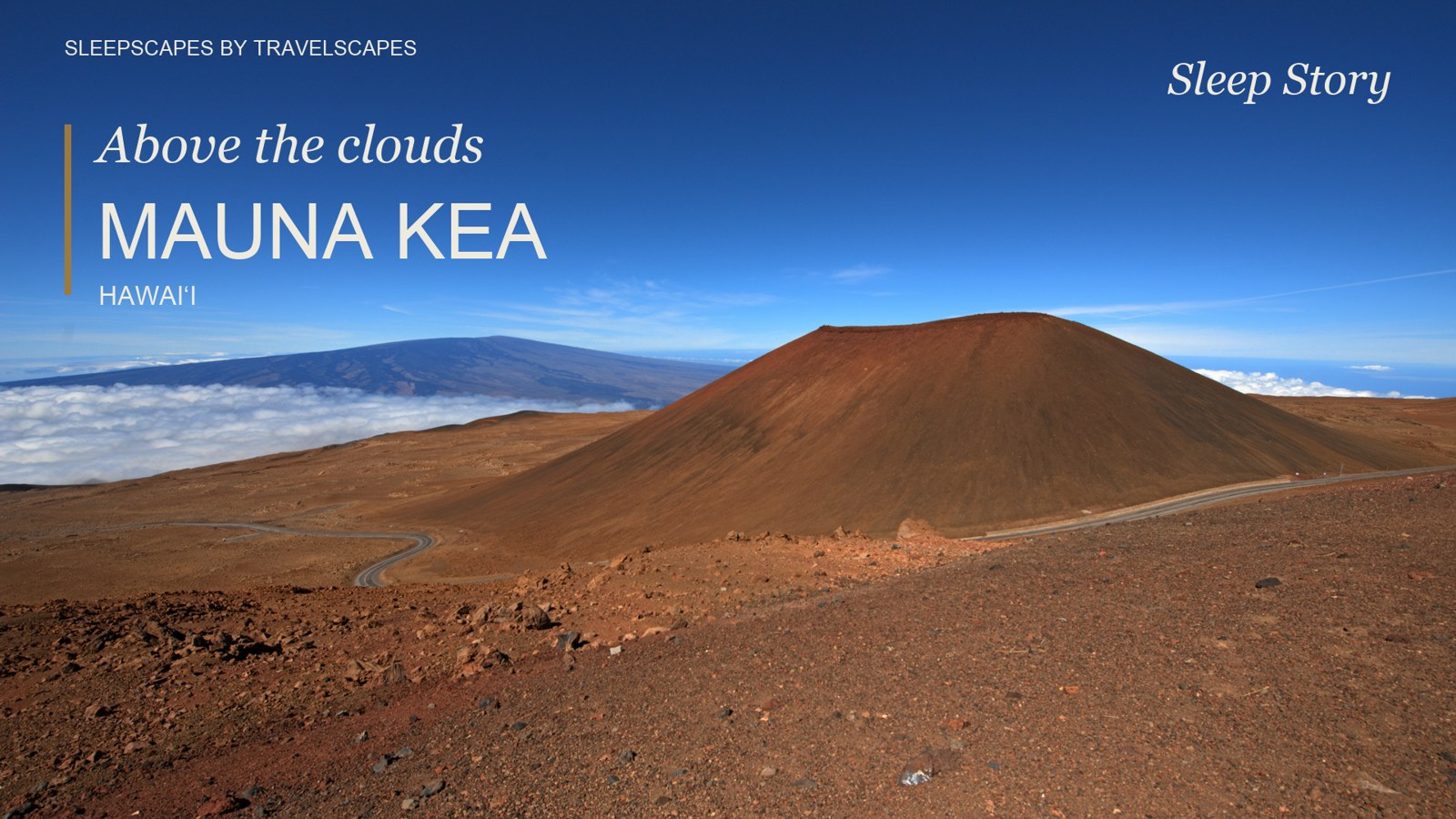
In this view, geology becomes shape and texture: a rounded cone, a rough field of rock, a ridge that lifts behind another ridge. You let the information settle into the landscape rather than trying to carry it separately. The cone in the photograph has one side warmed by the light and another side turned into shade. The change is gradual. Near its crest, the surface is a simple brown. Lower down, small differences become visible, then disappear into distance. The road runs nearby. It is a human line through a landscape that was not arranged around it. Sometimes it takes a broad bend. Sometimes it slips behind a rise and leaves only the land in view. From the passenger seat, you follow it without effort.
The driver attends to the road, while your attention can drift toward the horizon. A cloud line lies beyond the cone. Farther away, a broad mountain form appears in the distance. The foreground, the clouds, and that farther shape make a series of gentle layers. You look at the nearest layer first, then the next. There is time to notice how different the colors become as they recede. A warm brown close by. A cooler distant slope. White along the clouds. Blue above all of it. When the road turns, the layers move slightly against one another, and a little more of the distance becomes visible.
The nearest cone has a broad shoulder, rather than the sharp outline a drawing of a mountain might give it. Looking along that shoulder, you notice how the slope changes direction gradually. A little rise hides part of the road. Another lets the next bend appear. The land gives us only a section of the route at a time. That is all the passenger needs: a view through the window, with the next curve quietly taking shape. There is another part of the mountain's history that belongs to a colder time. Geological evidence shows that ice once covered parts of Mauna Kea's high country. Tonight, we do not have to turn that history into an imagined storm,
or change the clear day in the photographs. It can remain a quiet thought behind the dry ground: the mountain has known conditions very different from those seen in this frame. The stones before us are real. The brown slopes are real. The blue daylight is the light in which the camera made this view. A long history can rest behind an ordinary moment without making that moment less peaceful. You watch a patch of ground pass beside the window. Some pieces are dark and angular. Others are smaller, lighter, and closer together. In the distance, the roughness softens until the slope looks almost smooth. The road draws a gentle curve between the near texture and the far
outline. Inside, you shift the sweater into a more comfortable fold. Your hands rest for a moment, then become still again. The engine has its low, regular sound. The journey does not need another subject yet. The ground offers enough to look at, and the sky gives it space. A ridge that seemed close begins to move behind us. Another opens ahead. The view repeats its simple changes without repeating the same picture. Near becomes far. A shaded face gives way to a brighter one. The cloud layer appears, disappears behind the land, and returns at the next bend. You begin to recognize the rhythm of the road, even though you do not
need to remember its turns. You find a comfortable way to rest your head against the seat. The view does not become less interesting, but it becomes easier to let it pass. The large shapes are enough now. A near slope moving across the window, a farther ridge remaining visible, a patch of cloud that seems to stay in place. The engine has the same low note beneath all of it, and the cabin carries you gently from one view to the next. The mountain carries meanings beyond this visit. Maunakea has profound cultural and spiritual significance to Native Hawaiians, and a day's view from the road cannot contain all of that significance. We can hold the journey with respect, allowing the place to remain
larger than our own memory of it. The photograph gives us a view, not possession of the mountain. The road has brought us here for a short time, and it will carry us away again. As you look out, the land feels complete without our attention. A slope extends beyond the edge of the window. A cloud line continues beyond the photograph. The view does not end where the frame ends. That is one of the quiet pleasures of looking at a place: there is always more of it than we can see. You notice a low rise near the road, then a higher one beyond it. A pale building is now a small mark on a distant ridge. The observatory area has begun to recede. The vehicle is turning toward the route home, and the journey's direction
becomes simpler. We have seen what this visit allowed us to see. The open ground, the light on the buildings, the cloud layer below the distant mountain. Those details can travel with us without needing to become a complete account of the place. The road bends away. For a moment, one last clear view opens through the window. You let it remain there as long as the turn allows. Then the nearest slope comes between us and the ridge, and the observatories slip quietly out of sight. The last view of the ridge is simple. The pale buildings are separated by a wide stretch of ground, and the sky has plenty of space above them.
You do not search for another angle. This one can become the angle you remember. The vehicle begins its turn, and the window holds the scene for a moment longer. Then the land nearest the road takes its place, and the return journey becomes the view before us. On the return road, the view belongs more fully to the slopes. The buildings are behind us, and the ground near the window is scattered with stone. The road has a paler surface now. Its edges blend more gradually into the surrounding earth, though the route itself is still easy to follow in the remembered journey. A curve leads around the side of a rise, then opens toward a wider stretch of land.
You rest against the seat and let the movement of the vehicle become familiar. The driver takes care of the bends. From the passenger side, the mountain seems to turn gently past the window. The nearest ridge moves, while the distant cloud line stays in view a little longer. Looking out, you begin to notice fewer separate things. Earlier, a particular stone or a small part of a building might have held your attention. Now, a whole slope can be enough. Its color, its shaded side, the place where it meets the sky. The daylight in the photographs remains clear and steady. The quiet in our story comes from the way attention settles, rather
than from changing the weather or the time of day. We can remember a bright landscape softly. We can carry the blue sky into an evening room without asking it to become a night sky. The road continues its unhurried curve. The engine note changes a little, then returns to its familiar sound. Beside you, the sweater has kept its comfortable shape. There is room to look out, and room to close your eyes for a while. Either way, the return journey goes on. Along one bend, the road and the cloud line seem to travel in the same direction. One is close enough to show its surface. The other is far away, pale and soft. They remain together through part of the turn, then the road curves
inward and the clouds continue beyond it. You watch the two lines separate, and the near slope fills more of the window. A small change in direction has given the picture another quiet arrangement. Gradually, the details of the visit begin to find their places in memory. The observatory dome is one pale curve. The cinder cone is one warm brown shape. The road is a line that turns across the slope and disappears behind it. They do not need to remain as sharp as they were when the camera recorded them. The photographs can keep the sharpness. Memory can keep the ease of the journey. You picture the passenger window, and the familiar edge of the seat. You remember a stretch of cloud below the distant land, without trying to recover every small shape along it.
A journey sometimes becomes restful only after it is over, when the mind no longer has to prepare for the next turn. This one can begin to rest now. The vehicle moves toward the lower part of the route. The high views are behind us, but a little of their openness seems to remain in the cabin. A quiet space between one thought and the next. You adjust your position, and the seat feels comfortable again. The sweater lies across your lap in the imagined journey. Its weight is ordinary and familiar. The road sound continues beneath the story, low enough to become part of the background. Outside, the mountain has more slopes than we can follow, and more stones than we can count.
We let them remain together. A broad surface of brown and gray. A pale distance beyond it. The journey is becoming less a sequence of views and more the simple feeling of traveling home after a day outside. The mind keeps the order of a journey for a while, then begins to gather its moments in a different way. A pause beside the road may sit next to a view made farther along it. A color may remain without the bend that first revealed it. That is how this visit can become a quiet memory. We let its useful details settle, while the road itself continues toward the familiar end of the day Now the photographs are like prints placed in a quiet room. One shows the road across the ridge.
One holds a pale observatory against the sky. Another looks over rough volcanic ground. The last keeps the rounded cone and the cloud layer together. You can picture them as they are, each complete within its own frame. The room around them has enough space for other things: a comfortable chair, a folded sweater, a place for a cup, and a window through which the evening is passing. The day's journey has become something that can be looked at tomorrow. Tonight, the prints do not ask to be studied. Their colors can remain at the edge of attention. Brown, gray, white, blue. The shapes can become simpler as you grow more comfortable. A curve. A ridge. A pale line.
The remembered vehicle has reached its quiet destination, and the road no longer needs to continue through the story. The small sounds of travel fall away. Whatever quiet sounds belong to the room where you are can take their place. Perhaps there is a steady household sound nearby. Perhaps the room is almost still. We can leave those sounds as they are. The mountain is far away, the photographs have kept the day's light, and you have brought the journey home. There is no scene left to catch before it disappears from the window. No next turn to look for. The images are resting in their frames, with the road held safely inside one of them.
You can let your attention rest a little closer now, with the familiar place around you. One print is a little farther from the chair than the others. From where you are sitting, its nearest stones are already becoming a single texture. You could lean forward to see them more clearly, but tonight you are comfortable where you are. The picture has room for distance, and you have room for rest. The cup stays in its place. The sweater stays folded. The day has brought its few small things home again. A day outside often leaves one or two details clearer than all the others. Tonight, perhaps it is the curve of the road.
Perhaps it is the cloud layer, pale beneath the distant land. Perhaps it is simply the amount of sky in the view. Any one of those memories can be enough. The rest of the day can settle around it. The small things that once needed arranging have found their places. The journey's beginning, the pauses, the return road. They belong to a day that is already complete. In the quiet room of the story, the sweater is folded again, and the cup has been set down. The photographs remain on the wall. You can see the mountain without traveling toward it. You can remember the daylight without staying awake inside the memory. The words have become slower, and the space between them belongs to rest.
The nearest slope in the picture softens into one broad shade. The observatory buildings are pale marks, with plenty of sky above them. The cloud line is a patch of light across the distance. There is no need to bring the details closer again. The camera has done that part of the work, and the photograph can hold them until another day. Here, the room is familiar. The place where you are resting is close. The long return road is now only a line in a picture, and the journey along it has come gently to an end. You can leave the mountain in its frame and let the evening continue quietly around you. The evening room has its own small order. A chair beside the wall, a folded cloth, a quiet space near the window.
The mountain pictures fit into that order without changing it. They are views of somewhere far away, held within a place that is familiar. You can leave the far distance where it belongs, inside its frame. Close by, the room is settled, and the evening is passing at its own gentle pace. We have followed the mountain road home. The high ridges, the pale buildings, and the clouds remain in the photographs, just as the daylight visit recorded them. Our imagined journey has brought them into a quieter part of the day, then allowed them to rest. The road no longer moves past the window. It stays within the picture. The distant sky no longer needs to be followed to its edge. It simply gives the mountain room.
Brown ground beneath blue. A pale cloud line between the nearer slope and the far land. Those few shapes can remain together for a little while, then become less important. The room around you is enough now. Its familiar sounds, its familiar stillness, the comfort of the place where you are lying down. A thought can pass through without beginning another journey. A memory can settle without being finished in words. The photographs will be there when the day returns. Tonight, we can leave them gently. The curve of the road grows quiet. The mountain outline grows quiet. The small pale buildings rest beneath their clear sky.
There is a little space after the last words, and you do not need to wait for it. The remembered visit is complete. The road has brought us home. Good night.